Web design has evolved into a discipline that combines creativity, technical precision, and user experience. Today’s designers often juggle multiple browser windows, graphic editing software, UI prototyping tools, video conferencing applications, and development environments simultaneously. While these workflows require dependable graphics performance, they don’t necessarily demand the massive processing power of gaming or professional 3D rendering GPUs. This is why a low-power graphics card guide can be a valuable resource for web designers.
Choosing an energy-efficient GPU allows designers to build workstations that deliver smooth performance, lower operating costs, and quieter operation without paying for capabilities they rarely use. Understanding which graphics card best matches a web design workflow helps maximize productivity while keeping hardware investments practical and future-ready.
Understanding the Graphics needs of Modern Web Designers
Many people assume that every creative professional requires the most powerful graphics card available. In reality, web design places different demands on a computer than video editing, architectural rendering, or advanced 3D animation. Most web designers spend their day working with applications such as:
- Browser developer tools
- UI and UX design platforms
- Vector illustration software
- Image editing applications
- Code editors
- Content management systems
- Collaboration platforms
- Multiple browser testing environments
These tasks benefit from responsive graphics acceleration but generally rely more heavily on CPU performance, sufficient memory, and fast storage than on an ultra-high-end GPU.
A quality low-power graphics card provides hardware acceleration for modern design software while maintaining efficient energy usage, making it an excellent fit for many professional web design environments.
Why Low-Power GPUs Create Better Workstations?

Efficiency is becoming an increasingly important consideration when building any workstation. A graphics card with modest power requirements generates less heat, consumes less electricity, and often operates much more quietly than high-performance alternatives. These advantages become particularly valuable for web designers who spend long hours at their desks. Because with a low-power graphics card users can expect to enjoy:
- Lower electricity consumption
- Reduced heat generation
- Quieter cooling systems
- Smaller power supply requirements
- Better compatibility with compact desktop cases
- Lower overall system costs
Less heat inside the computer also allows other components to operate under more favorable conditions, potentially contributing to improved long-term reliability.
For freelancers, agencies, and businesses operating multiple workstations, these efficiency gains can also help reduce operating expenses over time.
Supporting Multi-Monitor Productivity
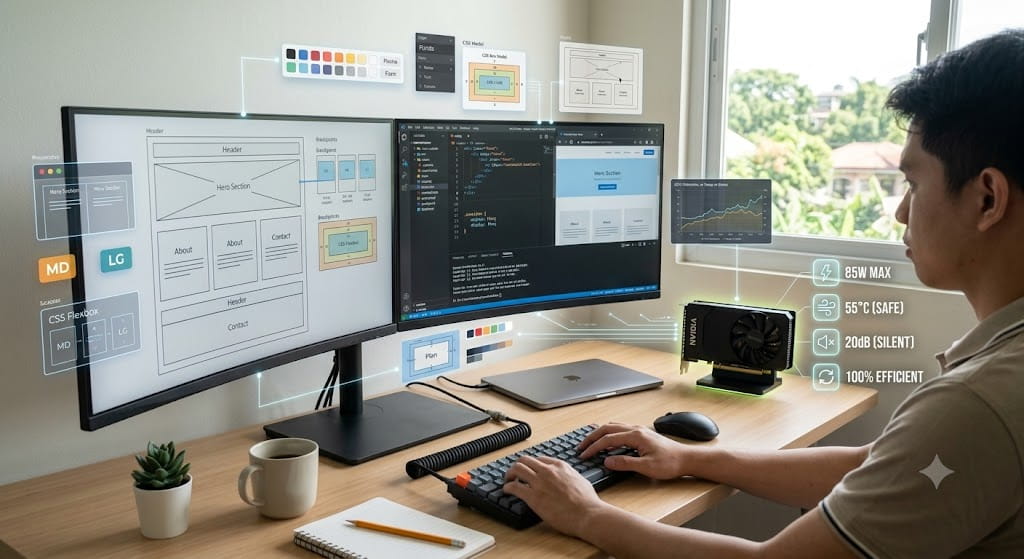
One of the biggest productivity improvements for web designers comes from using multiple displays. Designers frequently dedicate one monitor to design software while using another for browser previews, coding environments, project management tools, or client communication.
Fortunately, many low-power graphics cards support two, three, or even four high-resolution monitors without requiring excessive power consumption. A multi-monitor setup allows designers to:
- Compare desktop and mobile layouts simultaneously
- Preview responsive websites in real time
- Keep design references visible while working
- Separate coding and visual editing tasks
- Improve workflow organization
Rather than constantly switching between windows, designers can keep essential applications open across multiple displays, reducing interruptions and increasing efficiency throughout the workday.
For many professionals, this productivity improvement offers far greater value than the additional graphical horsepower of an expensive gaming GPU.
Balancing Performance, Cost, and Future Growth
One of the primary goals of any low-power graphics card is helping buyers avoid overspending on unnecessary hardware.
Many web design projects involve static graphics, responsive layouts, CSS animations, typography, and front-end development.
These tasks rarely require advanced ray tracing capabilities or thousands of GPU processing cores. Instead, designers should focus on graphics cards that offer:
- Reliable driver support
- Modern display outputs
- Hardware acceleration for creative software
- Adequate video memory for high-resolution assets
- Stable performance during multitasking
- Good energy efficiency
Investing in the right level of performance allows more of the workstation budget to be allocated toward components that directly improve productivity, such as faster SSDs, additional RAM, or higher-quality monitors.
At the same time, selecting a modern low-power GPU provides enough flexibility to handle future software updates and increasingly sophisticated browser technologies without requiring immediate hardware replacement.
Choosing Hardware that Supports Creativity
The best workstation is not necessarily the one with the highest benchmark scores. Instead, it is the system that enables designers to work comfortably, efficiently, and consistently throughout every project.
As browser technologies continue to evolve, websites incorporate richer media, smoother animations, and more interactive interfaces. Hardware acceleration will remain an important component of responsive design workflows, but that does not mean every designer requires enterprise-level graphics hardware.
By understanding actual workflow requirements, designers can build systems that remain productive for years while avoiding unnecessary complexity and expense.
Smart Hardware Choices Lead to Better Design Work
Effective web design is about making thoughtful decisions that balance aesthetics, usability, and performance. The same principle applies when selecting workstation hardware.
A well-researched low-power graphics card guide helps designers identify GPUs that provide dependable graphics acceleration without excessive power consumption or unnecessary cost. These efficient graphics cards support modern creative applications, multiple displays, browser testing, and daily multitasking while contributing to quieter, cooler, and more reliable workstations.
For freelancers, creative agencies, in-house design teams, and students alike, choosing the right low-power GPU is an investment in long-term productivity rather than raw performance. By matching hardware to actual design needs instead of chasing the highest specifications, web designers can create efficient work environments that encourage creativity, streamline workflows, and support outstanding digital experiences for clients and users alike.



 Selling tires and wheels online is complex. It’s technical, safety-related, and often confusing for buyers. From choosing the right wheel (velgen) size to ensuring proper fitment, customers worry about compatibility, performance, and price. The user experience must guide, reassure, and simplify every step. Focus



 Businesses have made enormous strides in simplifying transaction processing and information capture associated with supply chain and logistics operations. Supply chain and logistics optimization are neither simple nor cheap but it’s the largest chance for the majority of companies to significantly lower their cost and
 References, quotations, reviews, or”before and after” photographs are a excellent way to let people know that you can back up your claims. Publicity, awards, news reports or interviews are all a great way to establish your credibility.

 They’ve Made It Relatively Easy – No permit is required for this and you don’t need to obtain a mailing list. And using the Postal Service’s online tool, you can pick either a business/residential or merely residential route. What you can not do (at least ) is pick business-only. But the post office says they are working on this option.
 Here is what you can mail in this program: postcards that are large. The post office requires them”flats” Up to 12×15 inches at 14.5 cents each (for many deliveries). I’ve see that reference of”for most deliveries” but I am not sure in what scenarios it costs . You then take them to this particular post office and pay by check, money, metered postage or debit card (but not charge card the last I heard but they were working on this too ). If you wanted to ship your cards to another city simply mail them in a huge box with all the paperwork (and payment) inside.





 If you’re in the window retrofit business, your website should do more than look good. It should be converting visitors into leads—people who request a quote, call your team, or book an inspection. Many contractors build websites that look polished but don’t work well in terms of attracting new customers. Whether you’re highlighting your use of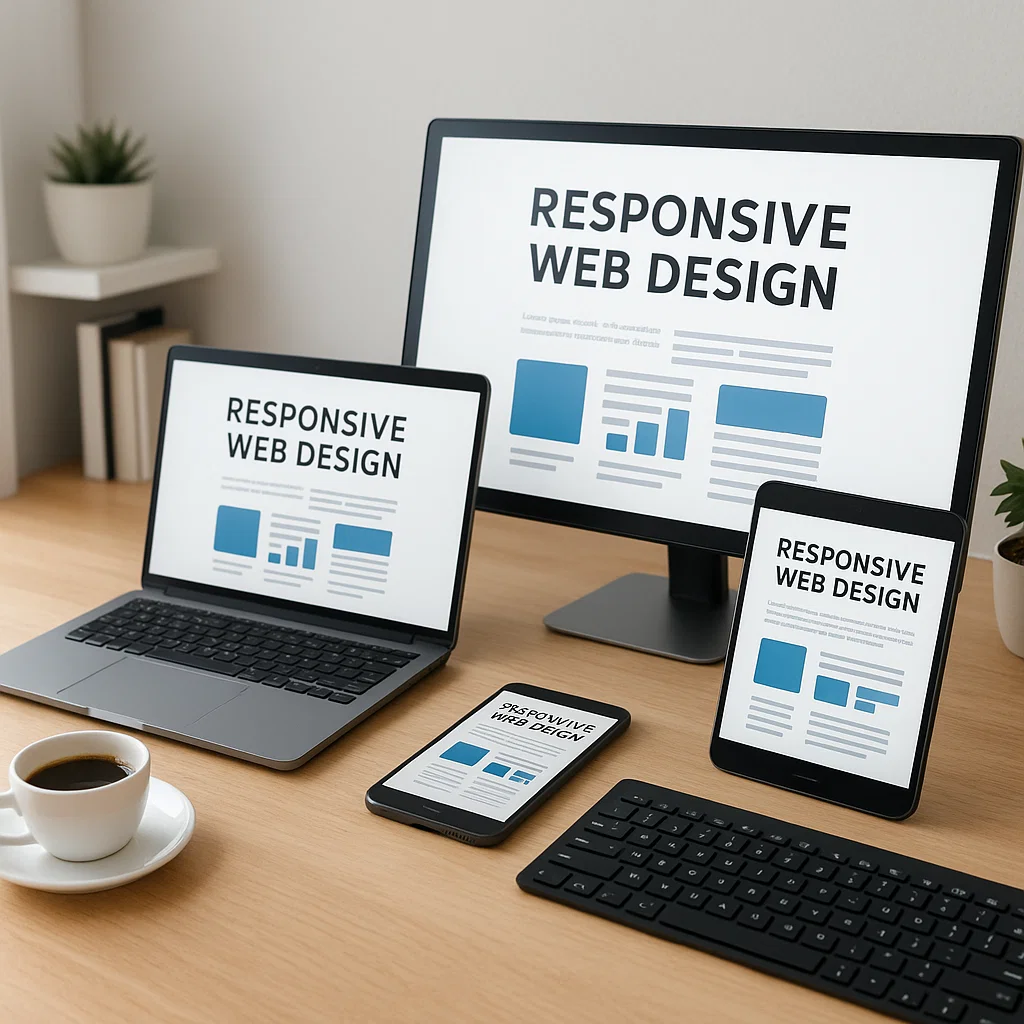
 Customers looking for herbal and functional edibles often seek natural health solutions. They expect clear product descriptions, transparent ingredient lists, and educational resources. Web design should cater to these expectations by ensuring a clean layout, easy navigation, and trust-building elements like customer reviews.
 When it comes to finding quality cabin luggage online, it can be overwhelming with so many options available. However, if you’re looking for a reliable and trustworthy source, look no further than Kono Ireland. With their extensive collection of 10kg cabin suitcase bags, they have everything you need for your next trip.


 Traveling by train in Germany can be an efficient and stress-free way to get around, but finding their way around train stations can be a challenge for many travelers. Travelers need to check db to plan ahead. Digital signage has become an increasingly popular solution for providing clear and concise information to train travelers. How effective are these signs, and what can be done to improve their usability?

